
Mastering the Software Development Process
Mastering the Software Development Process: A Practical Guide to Frameworks and Success
Section titled “Mastering the Software Development Process: A Practical Guide to Frameworks and Success”In today’s digital world, software is not just a tool — it’s the engine driving innovation. Whether you’re launching a SaaS startup or building enterprise-grade systems, mastering the software development process and using the right framework is critical.
This guide demystifies the software development process, explains popular frameworks, and shows how to apply them for successful outcomes.
🧭 What Is the Software Development Process?
Section titled “🧭 What Is the Software Development Process?”The software development process is a structured approach to designing, developing, testing, and maintaining software. It helps ensure that products are reliable, scalable, and aligned with user needs.
Typical stages include:
Section titled “Typical stages include:”- Planning: Define goals, requirements, and scope
- Design: Create architecture, UI/UX, and system blueprints
- Development: Write clean, maintainable code
- Testing: Verify performance, security, and functionality
- Deployment: Release to production or live environments
- Maintenance: Support and update the software over time
Skipping or rushing these stages often leads to buggy releases and unhappy users.
🧱 What Is a Software Development Framework?
Section titled “🧱 What Is a Software Development Framework?”A software development framework defines how a team organizes its work — including roles, processes, timelines, and tools. Frameworks provide the guardrails and rhythms needed to reduce chaos and improve predictability.
They help answer key questions like:
- Who does what and when?
- How are features prioritized?
- How is progress measured?
- How do we incorporate feedback?
A framework is not a silver bullet, but it sets the structure for success.
🚀 Top Software Development Frameworks
Section titled “🚀 Top Software Development Frameworks”Here are four widely-used frameworks — each with unique strengths:
1. Scrum (Agile)
Section titled “1. Scrum (Agile)”Scrum is a time-boxed, team-based framework that breaks work into short cycles called sprints (usually 1–2 weeks). It emphasizes:
- Cross-functional teams
- Continuous feedback
- Regular delivery
- Transparency through rituals (standups, retrospectives, etc.)
Scrum works especially well for evolving projects with changing priorities.
2. Kanban
Section titled “2. Kanban”Kanban is a visual workflow framework that focuses on throughput and limiting work-in-progress (WIP). It’s ideal for:
- Support or operations teams
- Continuous delivery environments
- Teams who prefer flow over time-boxed sprints
3. Waterfall
Section titled “3. Waterfall”Waterfall is a linear, phase-based model. It’s useful for:
- Fixed-scope, fixed-budget projects
- Compliance-heavy environments
- Projects where requirements are well-known in advance
However, it lacks flexibility for changing needs.
4. Lean Software Development
Section titled “4. Lean Software Development”Lean borrows from manufacturing. It encourages:
- Eliminating waste
- Delivering value fast
- Empowering teams
- Continuous improvement
Lean can be combined with Scrum or Kanban for excellent results.
🔄 How Scrum Powers Modern Software Development
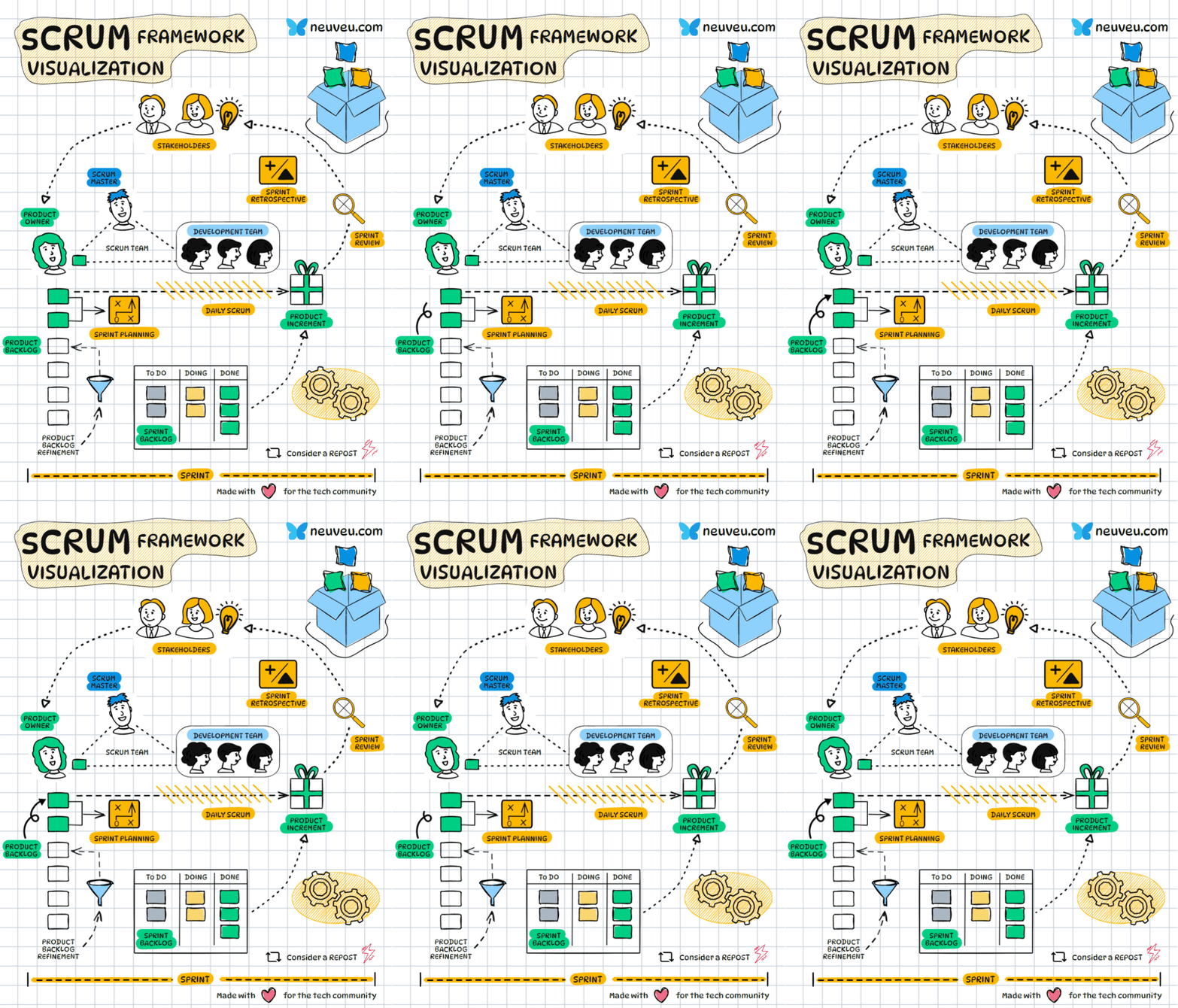
Section titled “🔄 How Scrum Powers Modern Software Development”At ONRISE.software, we use Scrum to manage the development lifecycle. It helps us deliver results fast while remaining flexible.
🔹 Roles
Section titled “🔹 Roles”- Product Owner: Defines priorities and business goals
- Scrum Master: Facilitates the process and removes blockers
- Development Team: Builds the product in increments
🔹 Core Components
Section titled “🔹 Core Components”- Product Backlog: Ordered list of all required work
- Sprints: Short development cycles (usually 2 weeks)
- Sprint Planning: Team defines what to build next
- Daily Standups: 15-minute sync to stay aligned
- Sprint Review: Demonstrate progress and gather feedback
- Retrospective: Reflect on what went well and what to improve
Why it works:
Section titled “Why it works:”- Focused delivery every 2 weeks
- Visibility and accountability
- Room for real-time changes and iteration
✅ Benefits of Using a Framework
Section titled “✅ Benefits of Using a Framework”Choosing the right framework can transform your software development outcomes.
With a structured framework, you gain:
- Faster time-to-market: Smaller batches, faster delivery
- Higher quality: Continuous testing and feedback
- Improved alignment: Everyone knows the roadmap
- Risk reduction: Early detection of blockers or missteps
- Stronger collaboration: Defined roles and communication rituals
🛠️ How ONRISE.software Applies Frameworks to Drive Results
Section titled “🛠️ How ONRISE.software Applies Frameworks to Drive Results”At ONRISE.software, we combine structured processes with agile frameworks to help clients bring their products to life.
Here’s how we implement:
Section titled “Here’s how we implement:”-
Discovery Phase
- Align on your goals, users, and product vision
- Identify MVP scope and technical constraints
-
Design & Architecture
- UX/UI wireframes and clickable prototypes
- Scalable system design and tech stack selection
-
Sprint-Based Development
- Build incrementally in two-week sprints
- Regular demos, reviews, and backlog grooming
-
Quality Assurance
- Automated and manual testing integrated into each sprint
- Security, performance, and user testing included
-
Launch & Support
- Smooth deployment process
- Post-launch monitoring, bug fixes, and feature expansion
We don’t just write code — we deliver software that works, scales, and delights users.
🧠 Who Should Use Scrum?
Section titled “🧠 Who Should Use Scrum?”Scrum is ideal for:
- Startups launching MVPs
- Enterprises modernizing platforms
- Agencies building iterative client work
- Teams tackling complex or evolving products
If your requirements change often or you need early feedback, Scrum is your friend.
📈 Best Practices for Teams Using Software Development Frameworks
Section titled “📈 Best Practices for Teams Using Software Development Frameworks”- Don’t just follow rituals — adopt the mindset: Focus on outcomes, not just process.
- Keep documentation tight and actionable: Especially user stories and acceptance criteria.
- Measure what matters: Track progress via value delivered, not hours spent.
- Adapt as you go: Retrospectives aren’t optional — they fuel improvement.
- Invest in communication: Clarity builds trust and reduces rework.
💬 Final Thoughts
Section titled “💬 Final Thoughts”The best teams don’t just “build software” — they master the software development process using the right frameworks.
When structure meets agility, you get products that are fast to market, high in quality, and aligned with real user needs.
📣 Get Started with ONRISE.software
Section titled “📣 Get Started with ONRISE.software”At ONRISE.software, we help businesses unlock their full potential through expert-led software development powered by frameworks like Scrum.
👉 Contact us for a free consultation and let’s plan your next big idea — together.